Life
We did not begin with the skills needed to build stage mechanisms or the knowledge to repair broken machines. We learned how to prepare fish from people on the island and gradually picked up farming skills by working alongside others in the rice fields. When we encounter something unfamiliar, we research it, experiment, and sometimes ask others for help.
Some things only become clear once we start working, and there are days when an immediate task takes priority over the work we had planned to make. Skills learned in one place can prove useful somewhere entirely unexpected. Living on an island where the things we need are not always readily available, we learn by doing and carry what we learn into the next task, whether in everyday life or in our artistic practice.
Life
We did not begin with the skills needed to build stage mechanisms or the knowledge to repair broken machines. We learned how to prepare fish from people on the island and gradually picked up farming skills by working alongside others in the rice fields. When we encounter something unfamiliar, we research it, experiment, and sometimes ask others for help.
Some things only become clear once we start working, and there are days when an immediate task takes priority over the work we had planned to make. Skills learned in one place can prove useful somewhere entirely unexpected. Living on an island where the things we need are not always readily available, we learn by doing and carry what we learn into the next task, whether in everyday life or in our artistic practice.
00 / INTRO
Making Changes to Everyday Life
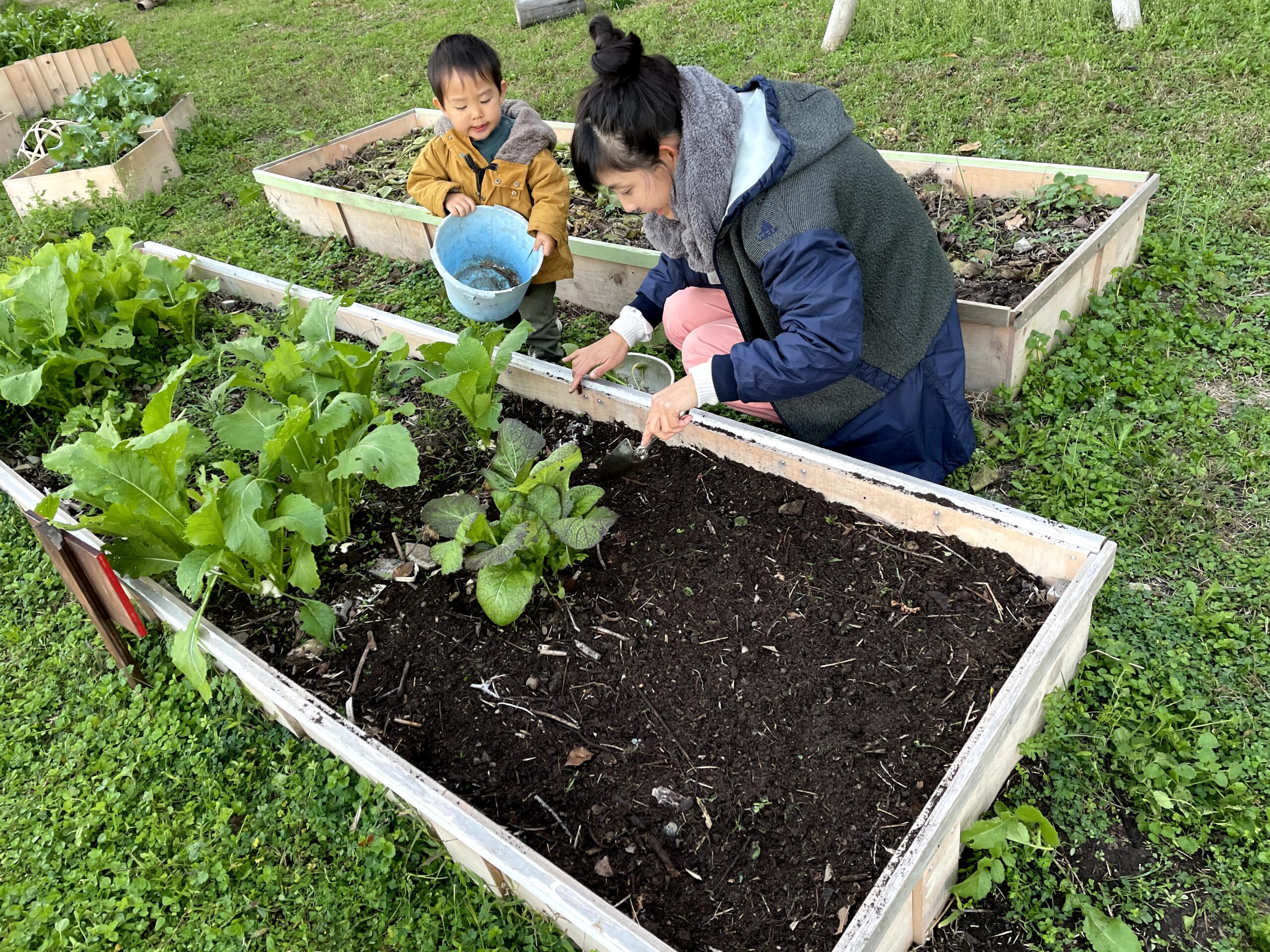
畑での作業
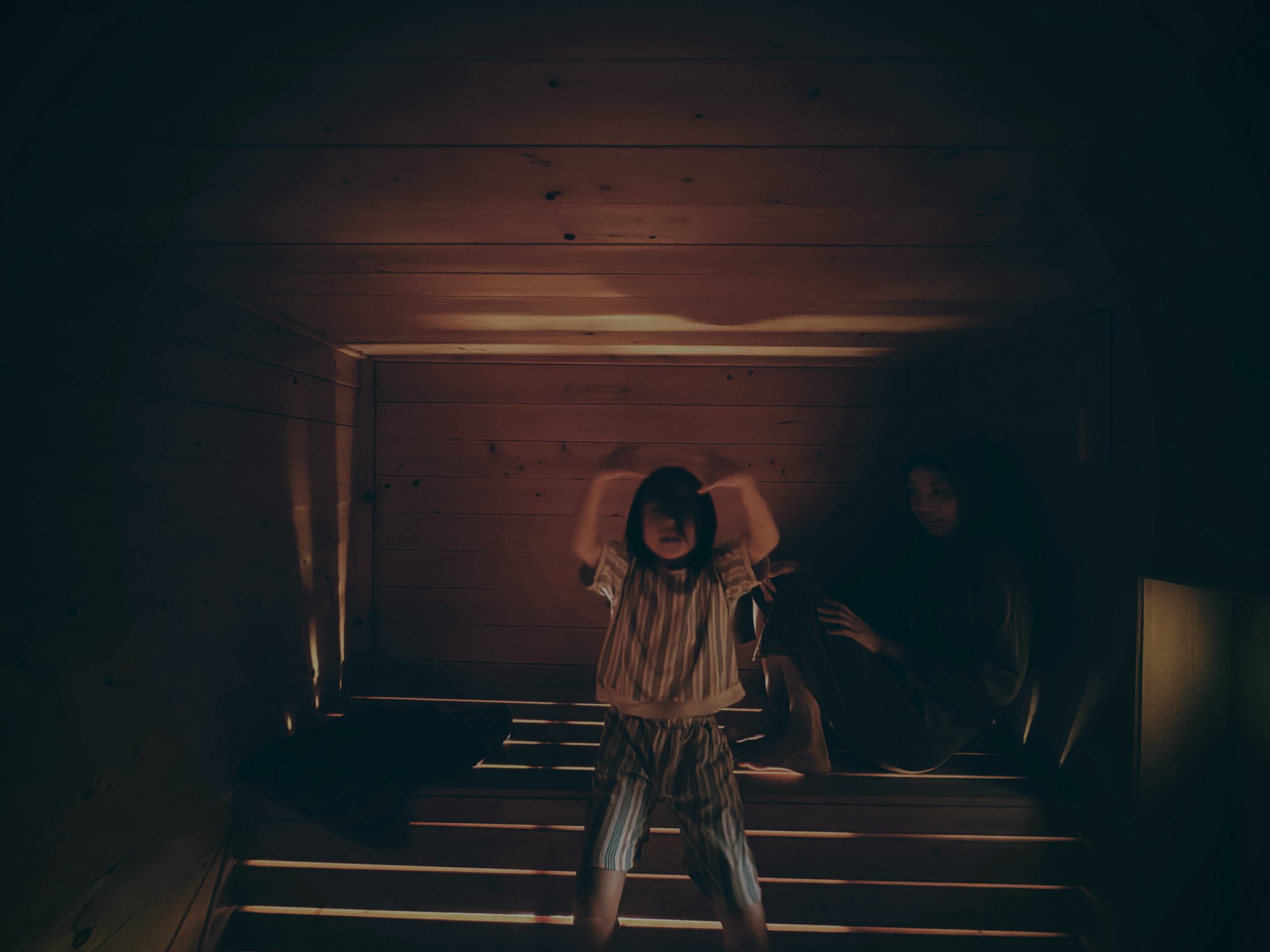
家でサウナ
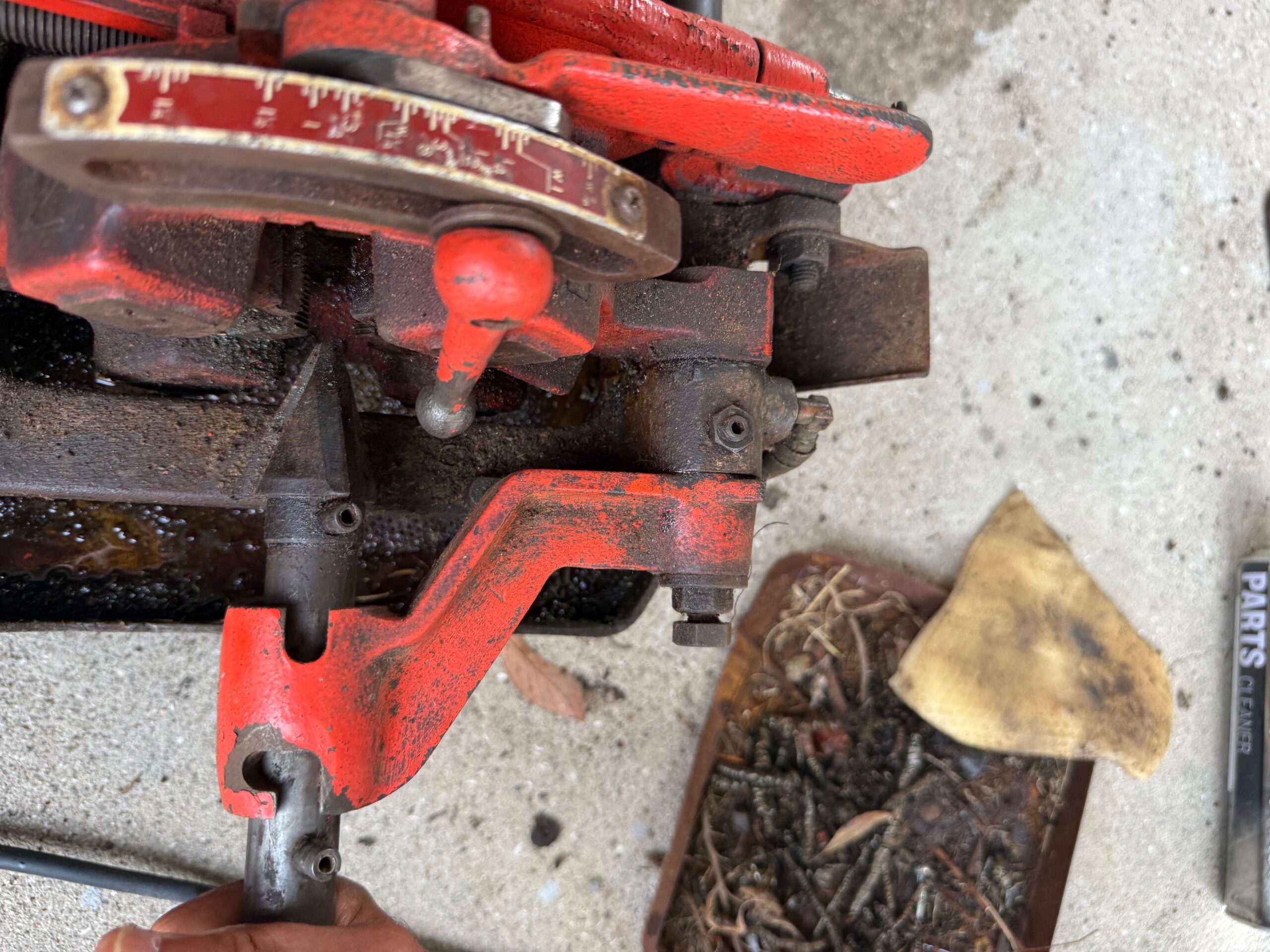
壊れた機械を分解して直す
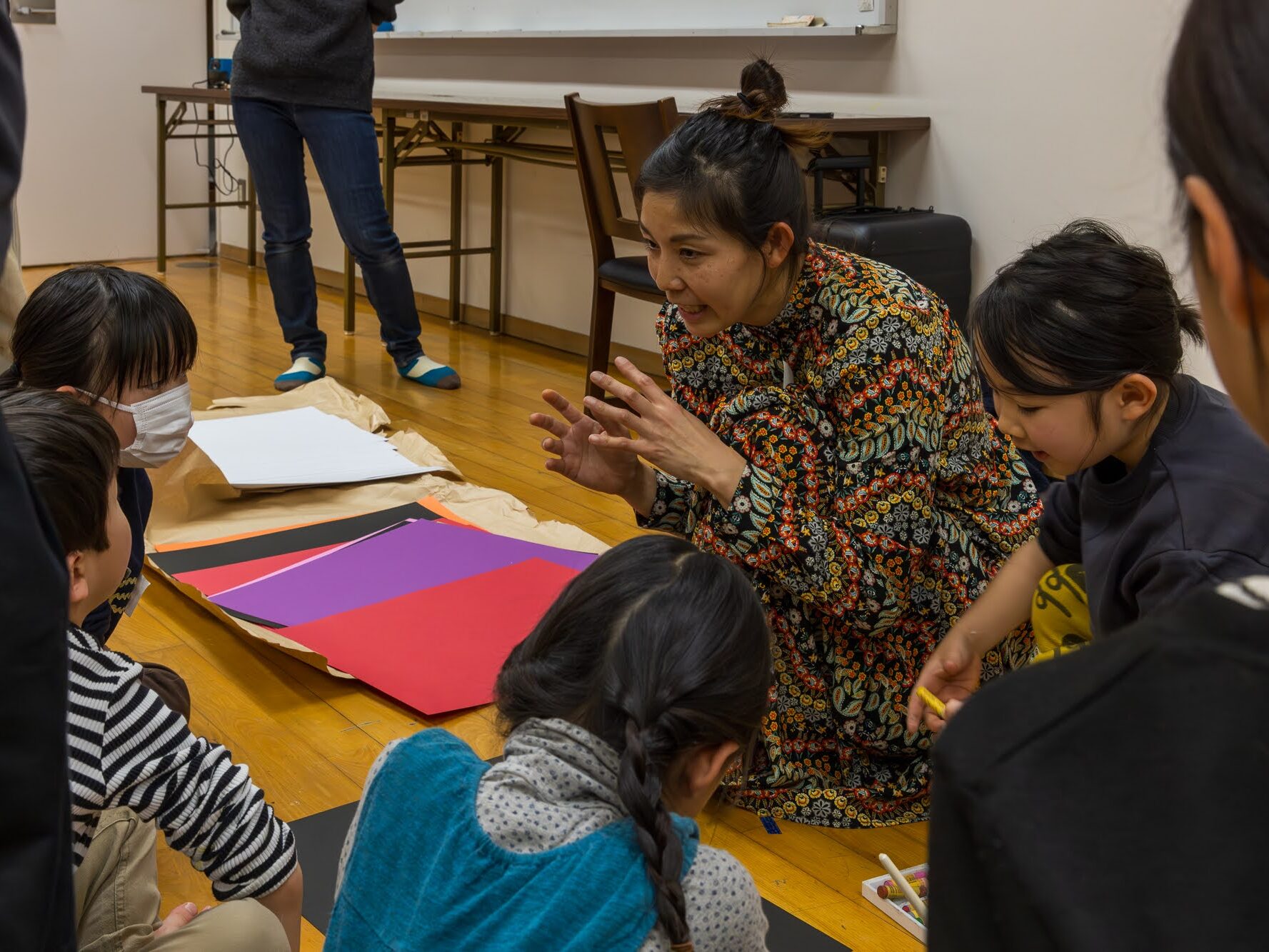
絵美の美術教室
00 / INTRO
Making Changes to Everyday Life
Vegetable garden
home sauna
fixing machine
Emi's art class
01 / PRIORITY
Deciding What Takes Priority
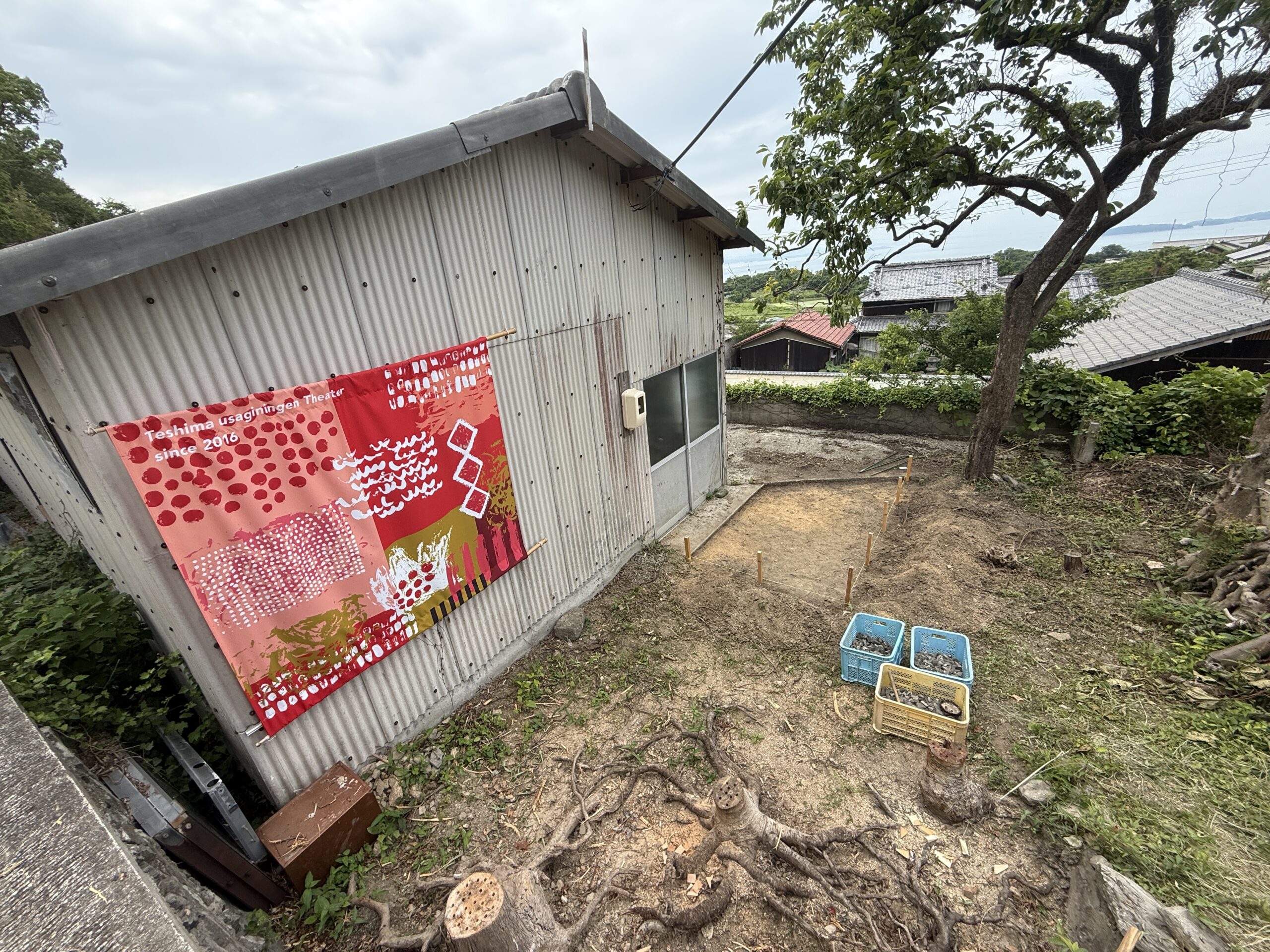
As rice-planting season approached, I took over the work of puddling the rice field from a friend who had started at 5 a.m. before going to work. Another friend joined us, and we finished that day what we had planned to complete by the weekend. In the afternoon, I turned to the concrete work behind the theater, but with little energy left, I stopped after making only a little progress.
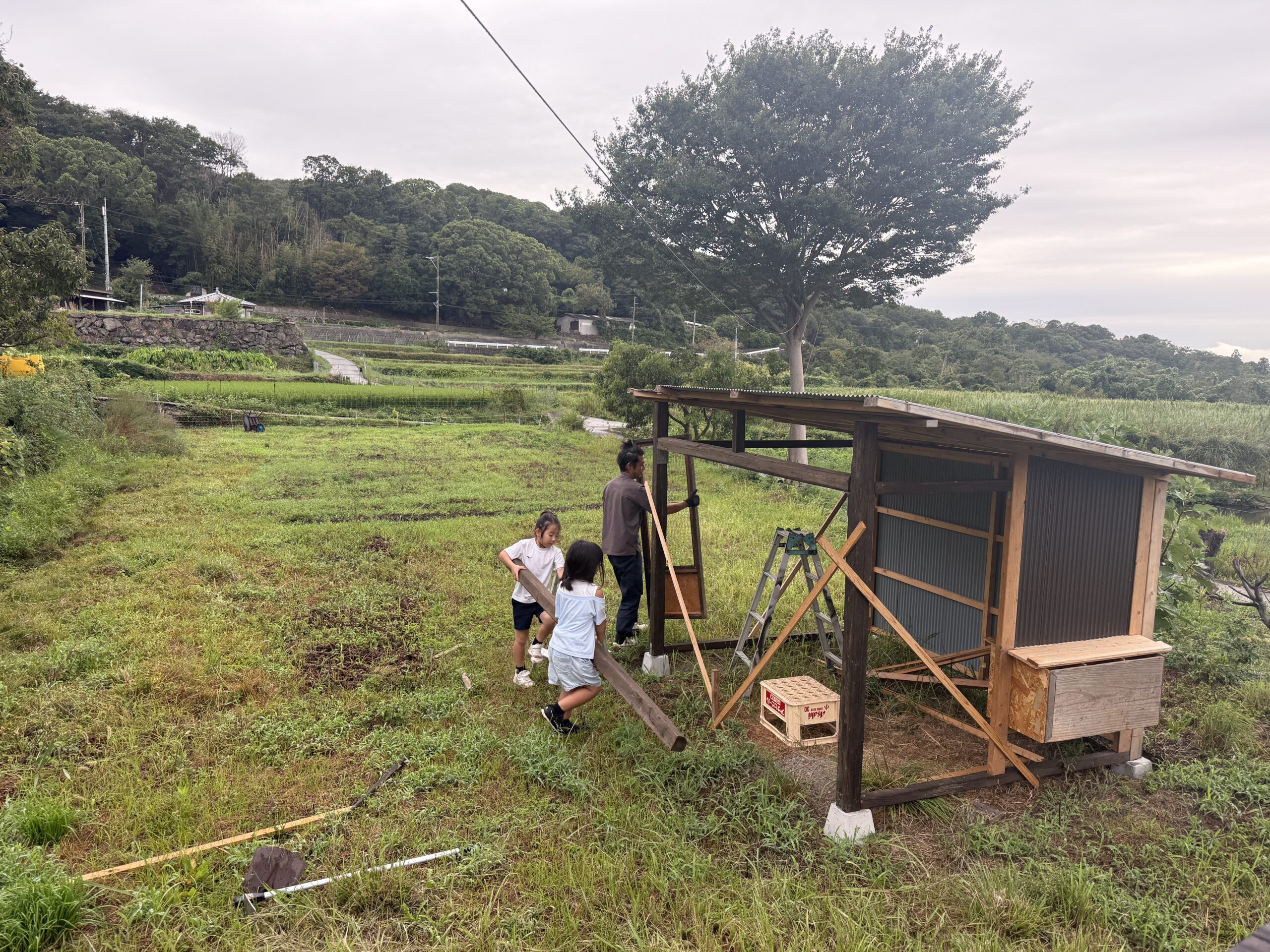
I had planned to build a chicken coop with Minagu during the summer holidays, but the heat made outdoor work difficult, and our residency in Toyama was approaching. We postponed the project until after the holidays. Once we returned to the island, children who came over to play after school joined us as we resumed construction, carrying posts and attaching wire mesh.
作品「カカシ」の視点
01 / PRIORITY
Deciding What Takes Priority
As rice-planting season approached, I took over the work of puddling the rice field from a friend who had started at 5 a.m. before going to work. Another friend joined us, and we finished that day what we had planned to complete by the weekend. In the afternoon, I turned to the concrete work behind the theater, but with little energy left, I stopped after making only a little progress.
I had planned to build a chicken coop with Minagu during the summer holidays, but the heat made outdoor work difficult, and our residency in Toyama was approaching. We postponed the project until after the holidays. Once we returned to the island, children who came over to play after school joined us as we resumed construction, carrying posts and attaching wire mesh.
作品「カカシ」の視点
02 / LEARNING
Encountering the Unknown
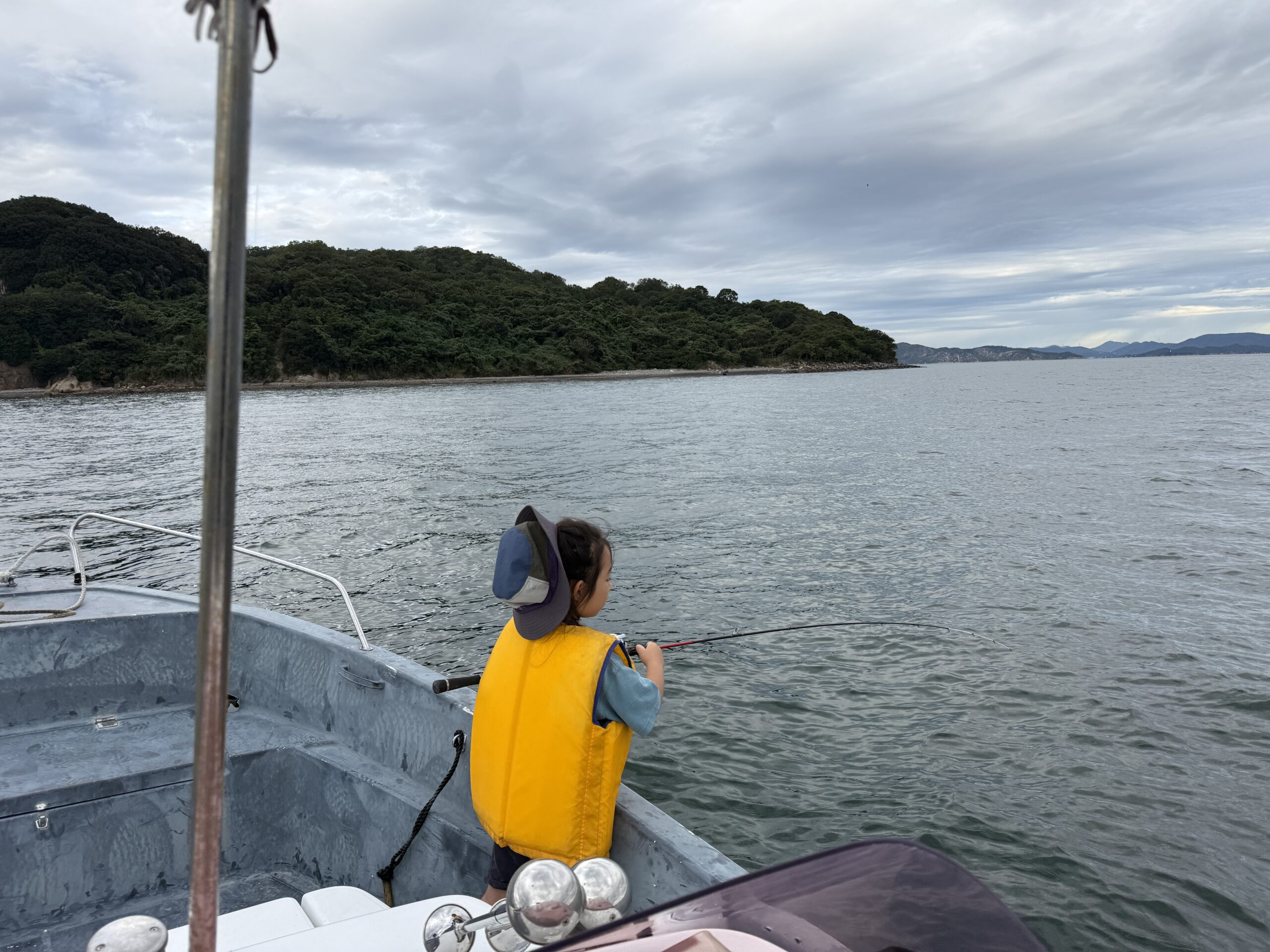
I went squid fishing with an experienced local fisherman. He taught me how to position the boat in relation to the current and how to work the lure. We caught ten squid that day. A few days later, I took my own boat to the spot he had shown me, but this time I caught nothing.
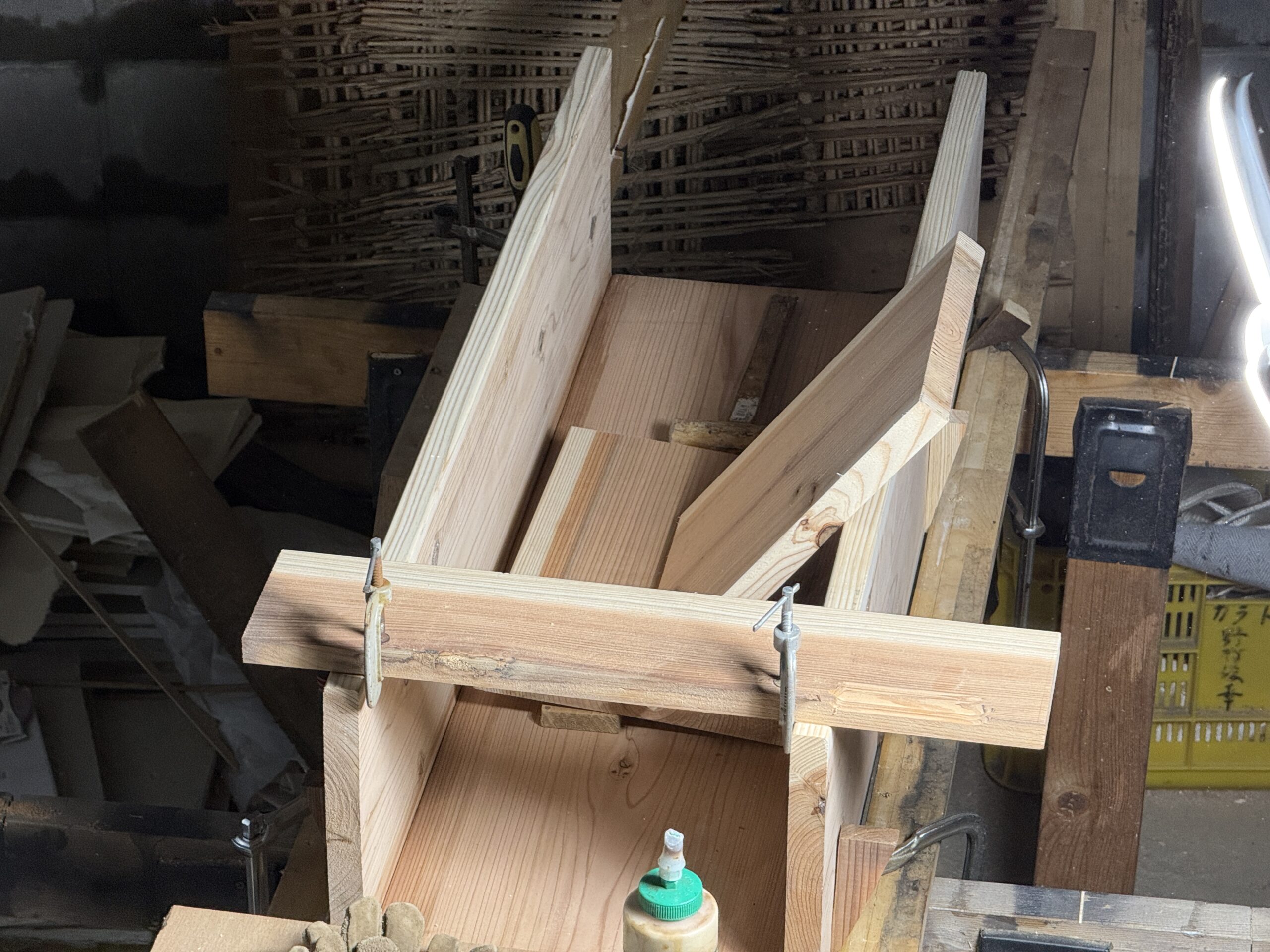
During our residency in Toyama, I built a wooden box for a footbath using cedar boards. I remembered a neighbour I had worked with on Teshima using wooden wedges to clamp pieces of wood together. Without any clamps available, I assembled the box by hammering angled pieces of wood into place.
02 / LEARNING
Encountering the Unknown
I went squid fishing with an experienced local fisherman. He taught me how to position the boat in relation to the current and how to work the lure. We caught ten squid that day. A few days later, I took my own boat to the spot he had shown me, but this time I caught nothing.
During our residency in Toyama, I built a wooden box for a footbath using cedar boards. I remembered a neighbour I had worked with on Teshima using wooden wedges to clamp pieces of wood together. Without any clamps available, I assembled the box by hammering angled pieces of wood into place.
03 / CONTINUING
How Things Change Through Continued Practice
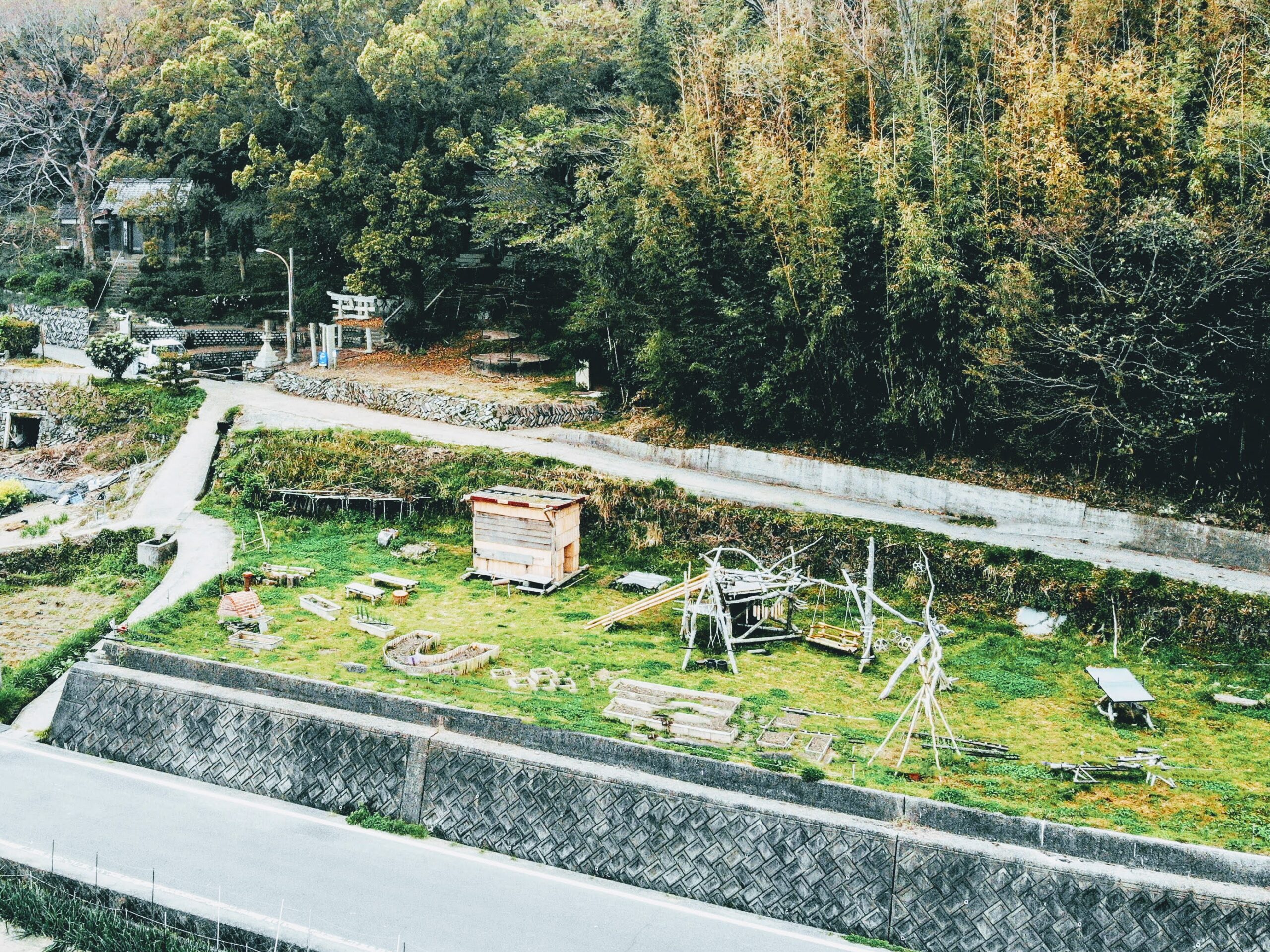
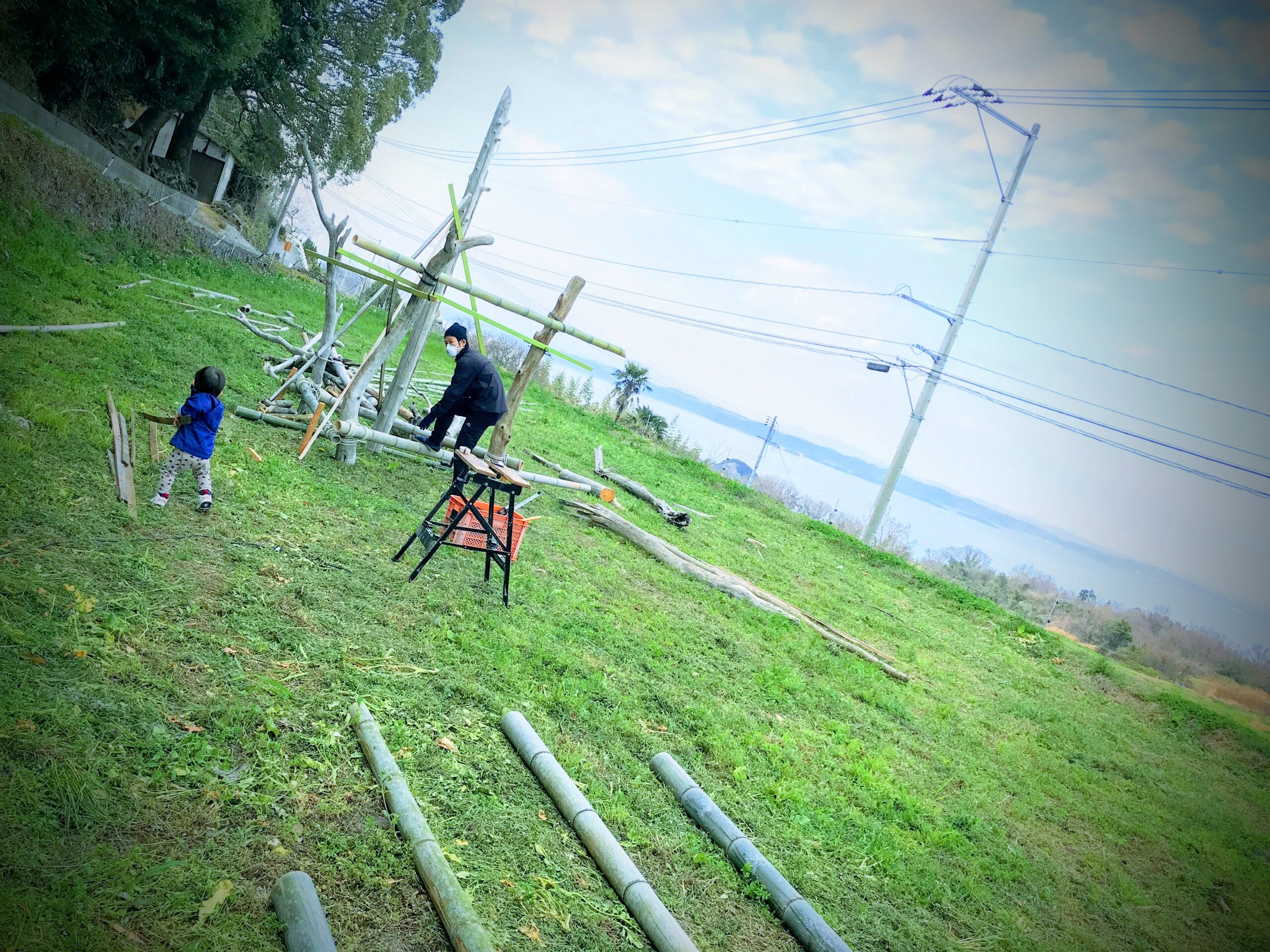
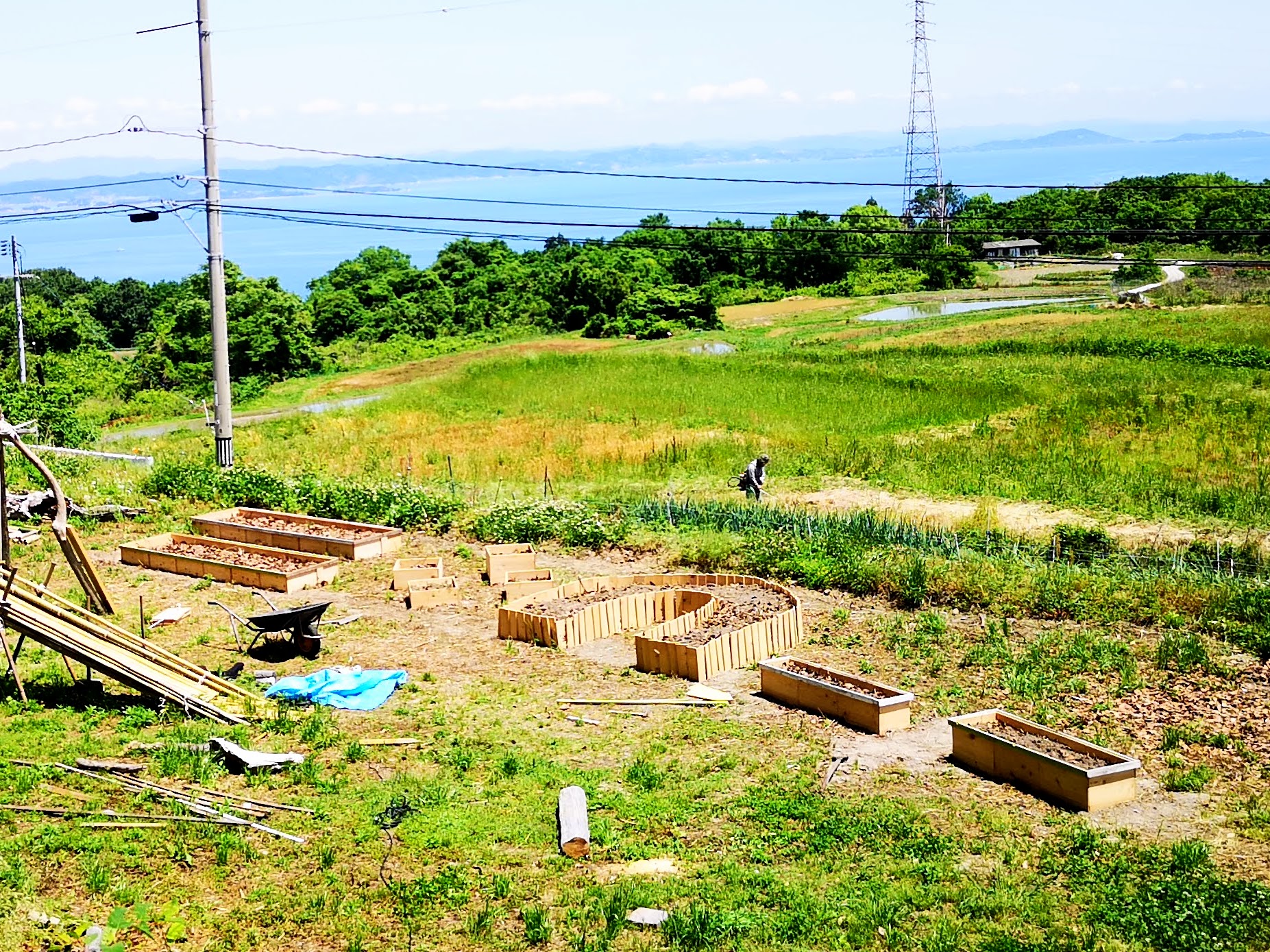
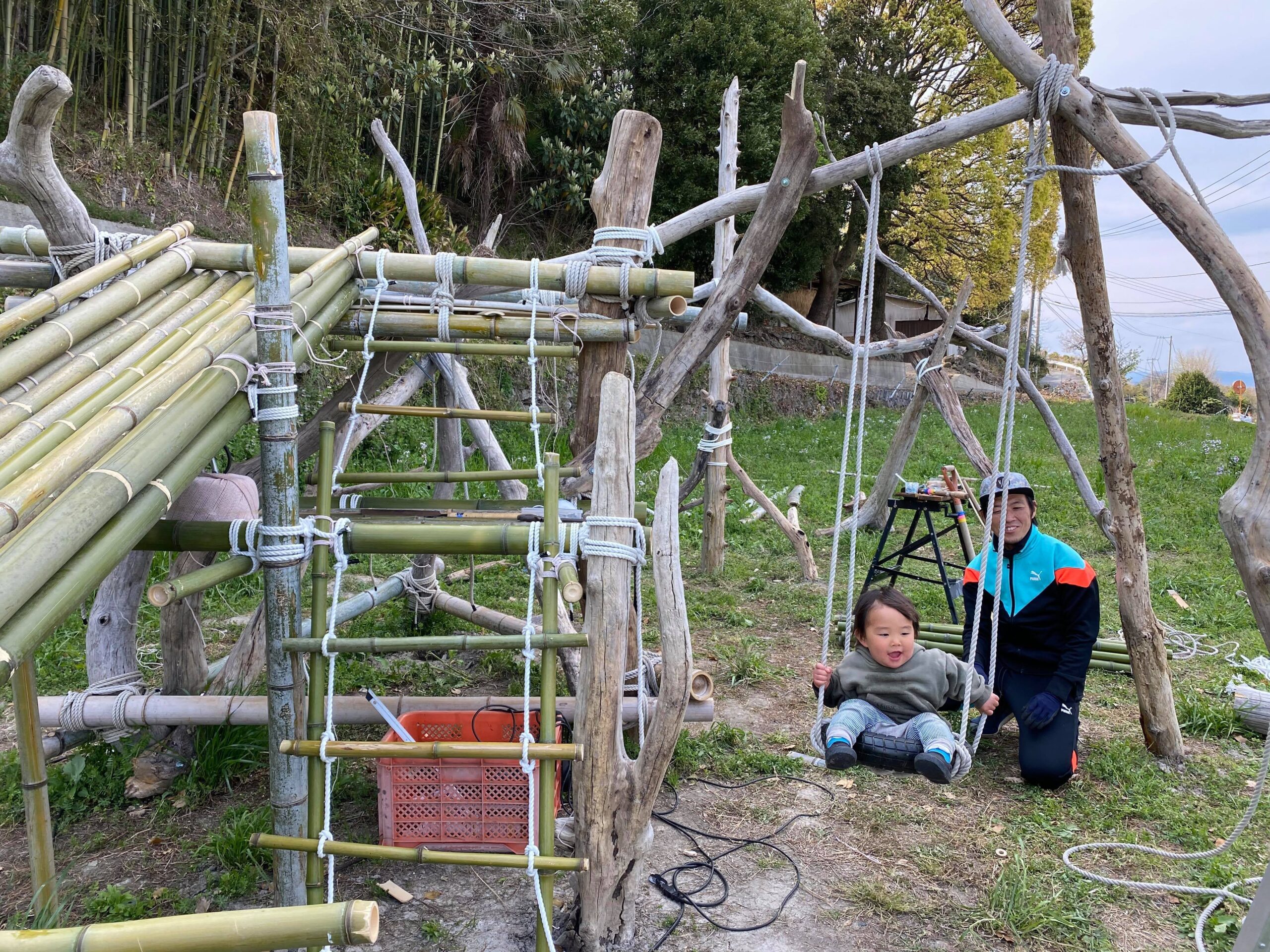
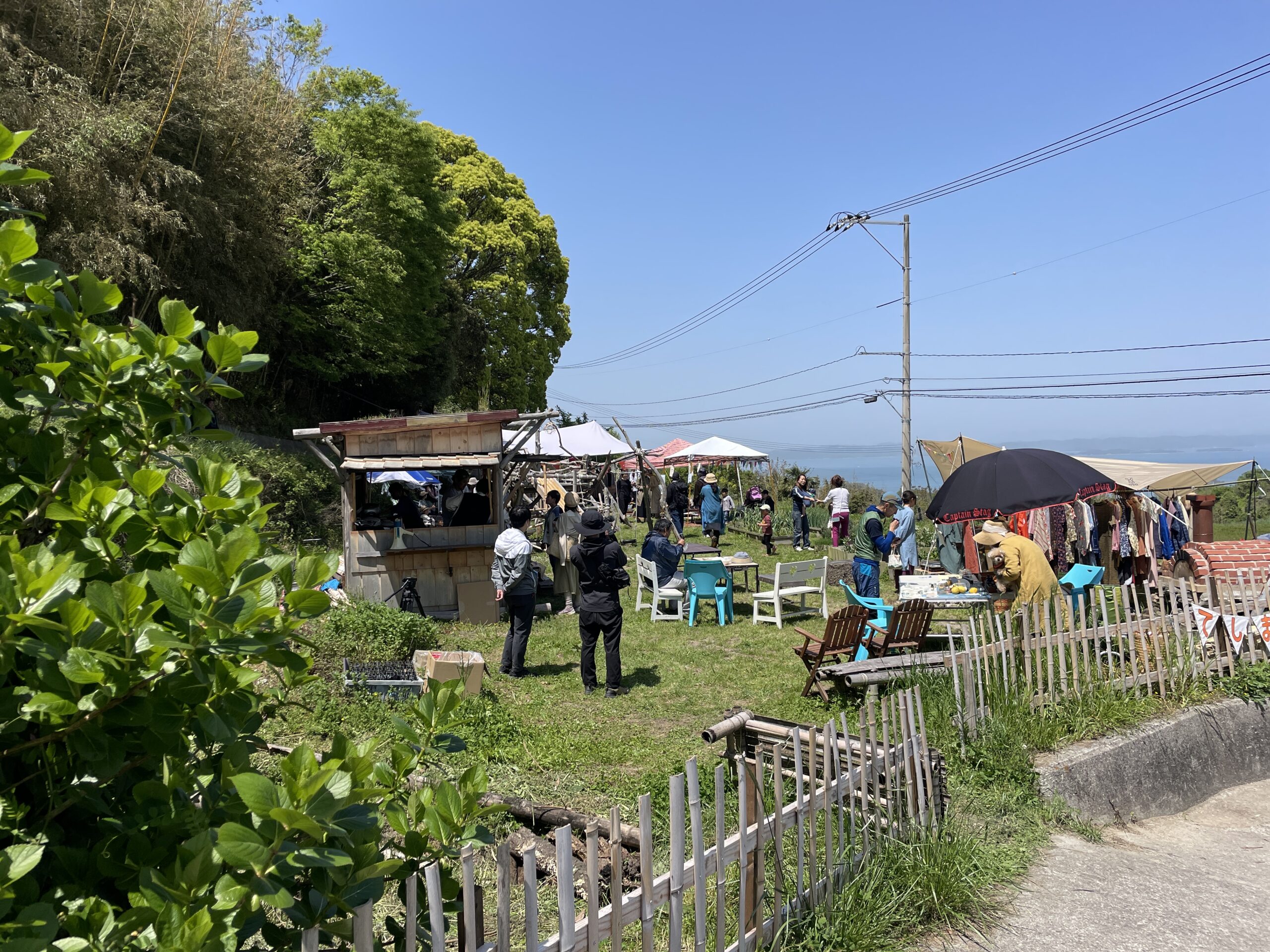
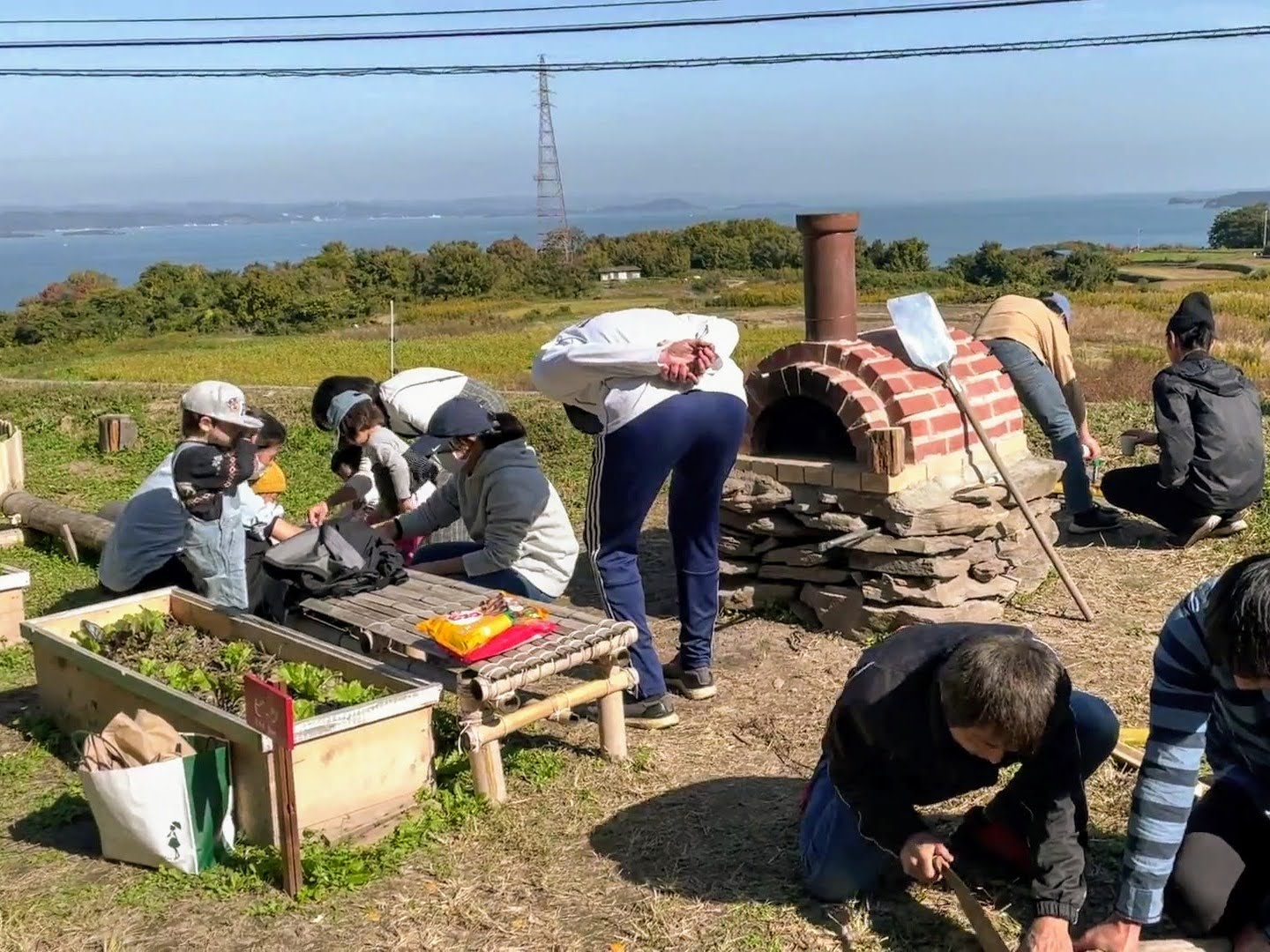
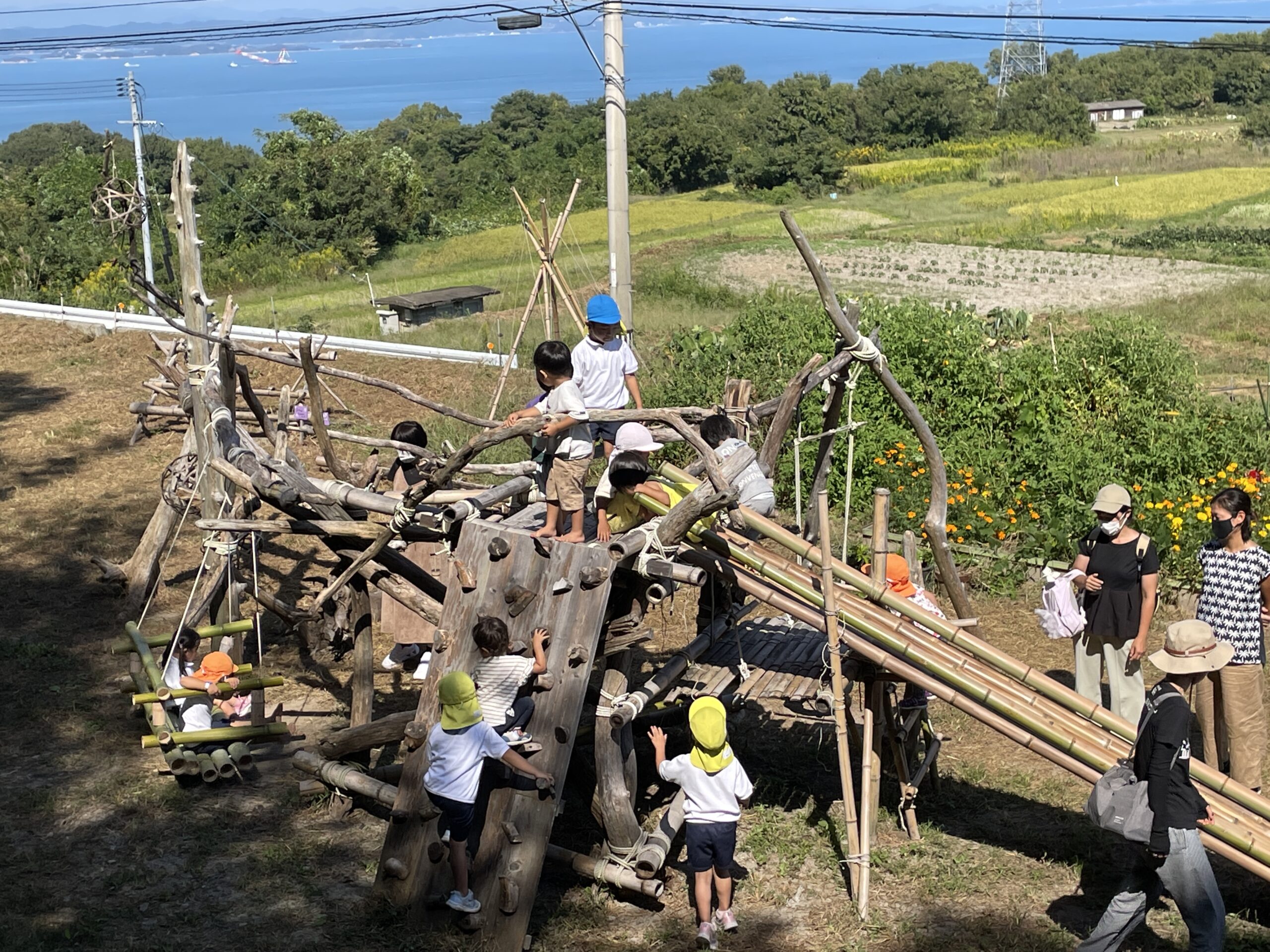
While touring Europe, we encountered a community centred around children. When the COVID-19 pandemic gave us more time, we began turning an abandoned field into a park. As the work progressed, I became increasingly aware of how often community decisions on the island were made primarily by older men. I wanted to create a place where women and children could take the lead. What began with play equipment gradually grew to include a pizza oven, a vegetable garden, and a small shed as people continued to use the space.
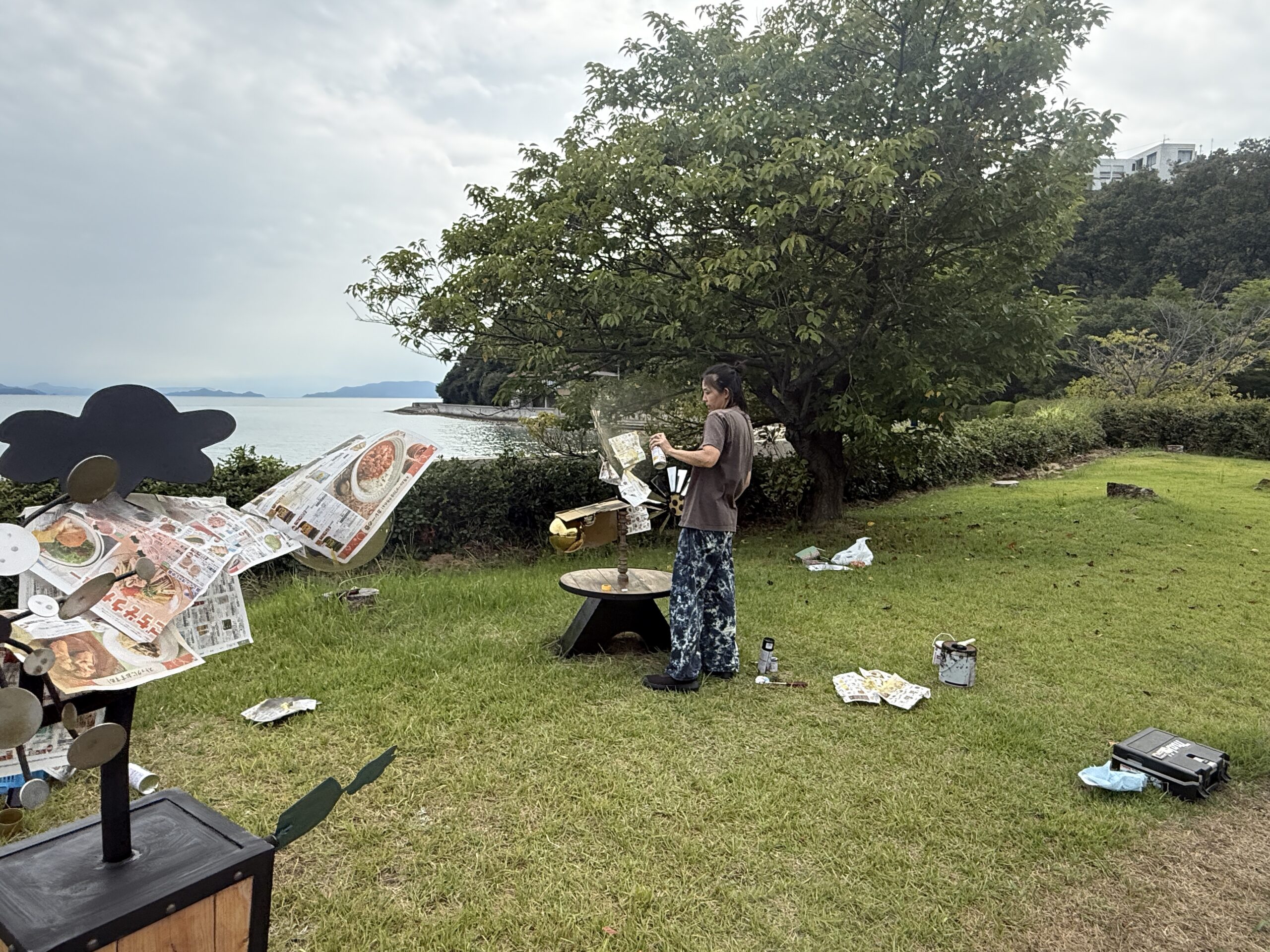
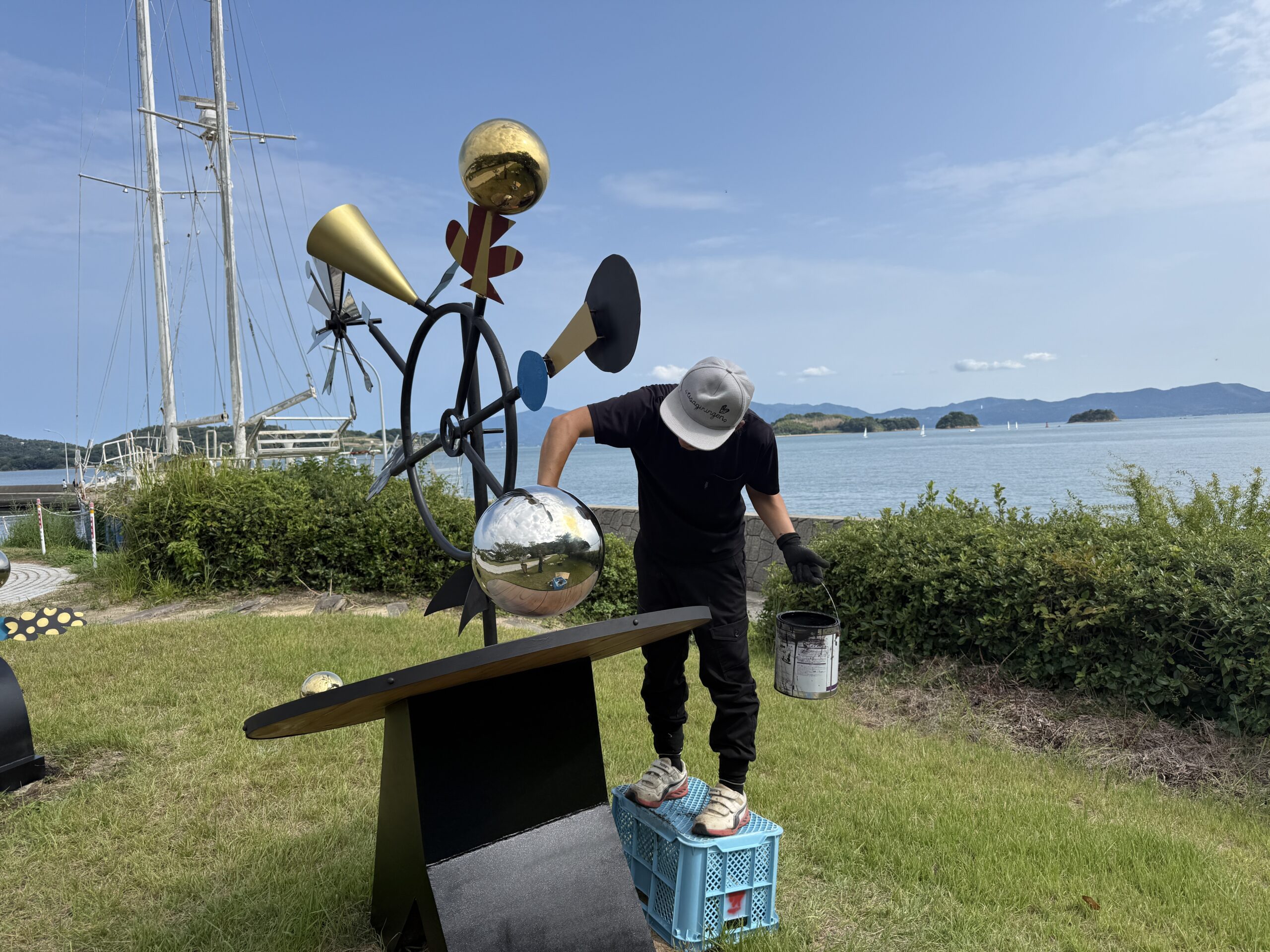
We return every six months to maintain the outdoor sculptures we installed in Ushimado. Nearly two years after their installation, we repainted most of the surfaces during our latest visit. When we removed the steel panels, we found rainwater collected inside, and some of the wooden parts had begun to crack. The maintenance period is five years. What will happen to the works after that has yet to be decided.
03 / CONTINUING
How Things Change Through Continued Practice
While touring Europe, we encountered a community centred around children. When the COVID-19 pandemic gave us more time, we began turning an abandoned field into a park. As the work progressed, I became increasingly aware of how often community decisions on the island were made primarily by older men. I wanted to create a place where women and children could take the lead. What began with play equipment gradually grew to include a pizza oven, a vegetable garden, and a small shed as people continued to use the space.
We return every six months to maintain the outdoor sculptures we installed in Ushimado. Nearly two years after their installation, we repainted most of the surfaces during our latest visit. When we removed the steel panels, we found rainwater collected inside, and some of the wooden parts had begun to crack. The maintenance period is five years. What will happen to the works after that has yet to be decided.